
Explore the ultimate comparison of gold vs stock investment returns. We analyze historical performance, risk, and inflation hedging to guide your portfolio strategy.
Table of Contents
Gold vs Stock Investment: Which Gives Better Returns?
When building a robust investment portfolio, few debates are as classic as gold vs stock investment returns. Should you trust the timeless, tangible allure of gold, or the dynamic, growth-oriented potential of the stock market? The answer isn’t a simple one, as it hinges on your financial goals, risk tolerance, and investment timeline. This deep dive will dissect the historical performance, risks, and roles of both asset classes to help you decide where to allocate your capital for the best possible outcome.
Understanding the Core Assets: Stocks and Gold
Before we pit them against each other, let’s define what we’re comparing.
What Are Stocks?
When you buy a stock, you’re purchasing a small piece of ownership (a share) in a publicly traded company. Your gold vs stock investment returns from stocks come from two primary sources:
- Capital Appreciation: The increase in the share price over time.
- Dividends: A portion of the company’s profits distributed to shareholders.
Stocks represent a claim on the future earnings and growth of a business, making them a productive asset.
What is Gold?
Gold is a precious metal, a tangible commodity with no earnings or cash flow. It’s considered a store of value. Your returns are solely based on:
- Price Appreciation: The market price of gold rising from when you buy to when you sell.
Unlike stocks, gold doesn’t generate income. Its value is derived from scarcity, sentiment, and its historical role as a form of currency.
Historical Performance: A Head-to-Head Look
History provides the most concrete data for our gold vs stock investment returns analysis. Over the very long term, the scales have tipped decisively in one direction.
The Long-Term Winner: Stocks
Since 1928, the S&P 500 index (a proxy for the U.S. stock market) has delivered an average annual return of approximately 9-10%, including dividends reinvested. A $10,000 investment in the S&P 500 50 years ago would be worth over $1.2 million today. This powerful compounding effect is why stocks are the cornerstone of most long-term wealth-building strategies, such as retirement accounts. The long-term data on gold vs stock investment returns clearly favors equities for pure growth.
Gold’s Role as a Preserver of Wealth
Gold’s performance is more nuanced. It hasn’t matched the stock market’s long-term compounding power. However, it has spectacularly preserved wealth during specific periods of crisis. For instance, during the 1970s stagflation and the 2008 Financial Crisis, gold prices soared while stocks plummeted. Its long-term average annual return is closer to 5-6% since the gold standard was abandoned in 1971. So, while the raw numbers in the gold vs stock investment returns debate favor stocks, gold’s value isn’t just in its average return—it’s in its non-correlation.
Risk and Volatility: A Tale of Two Profiles
This is where the comparison gets critical. Your comfort with risk is a major factor in choosing between these assets.
Stock Market Volatility
Stocks are inherently volatile. It’s normal for the market to experience corrections (drops of 10%) and even bear markets (drops of 20% or more). Companies can fail, industries can be disrupted, and economic recessions can cause prolonged downturns. This volatility is the price you pay for higher long-term gold vs stock investment returns. The key is time; historically, the market has always recovered from its lows, given a long enough horizon.
Gold’s Stability and Safe-Haven Status
Gold is famously a “safe-haven” asset. In times of geopolitical uncertainty, high inflation, or market panic, investors flock to gold, driving its price up. It acts as a portfolio insurance policy. While its price can be volatile in the short term, its long-term value has been remarkably stable for centuries. This characteristic is a crucial differentiator when evaluating the safety of gold vs stock investment returns.
Inflation Hedging: Which Asset Protects Your Purchasing Power?
Inflation erodes the value of cash. A key question for any investor is: which asset protects me?
- Gold: Has a long reputation as an inflation hedge. Because it’s priced in dollars, when the dollar’s value falls, it often takes more dollars to buy an ounce of gold. This was starkly evident in the high-inflation 1970s.
- Stocks: Can also be an effective hedge over the long run. Companies can often pass increased costs onto consumers, preserving their profit margins and, by extension, their share price. However, in short-term spikes of inflation, stocks can suffer as central banks raise interest rates to combat it.
When considering gold vs stock investment returns in the context of inflation, gold often wins in the short-term spikes, while quality stocks can protect you over decades.
Liquidity and Costs of Investing
How easily can you buy and sell?
- Stocks: Highly liquid. You can buy or sell shares of major companies in seconds during market hours with very low transaction fees (especially with modern brokerages).
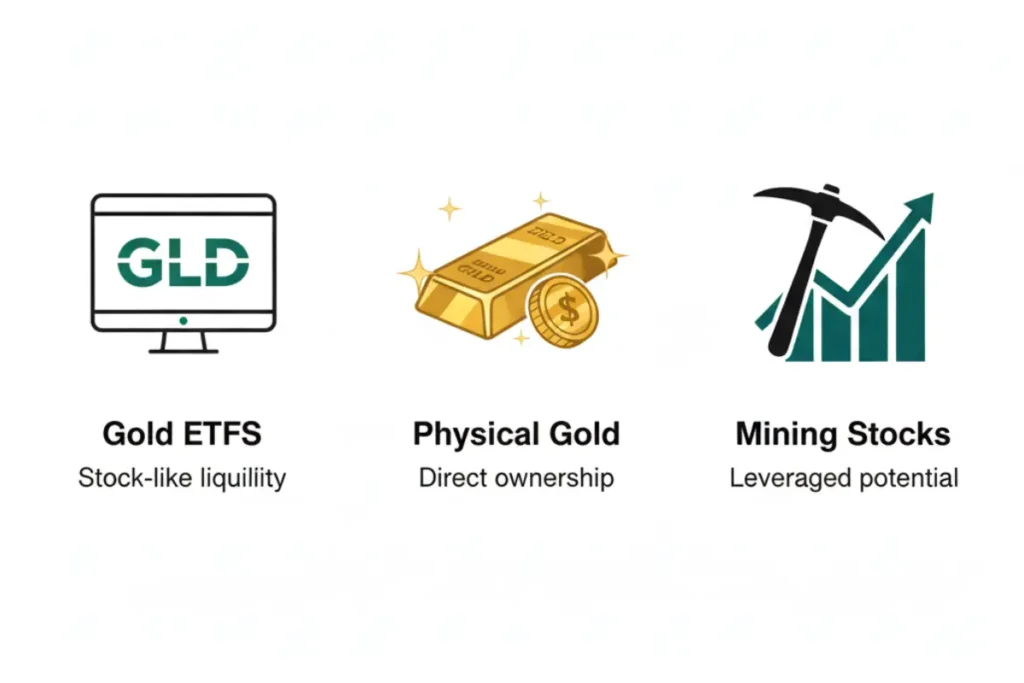
- Physical Gold: Less liquid. Selling gold bars or coins involves verification, potential dealer markups, and storage costs (e.g., a safe deposit box). However, Gold ETFs (Exchange-Traded Funds) now offer stock-like liquidity for gold exposure.
The ease of transaction is a practical advantage for stocks in the gold vs stock investment returns discussion.
Gold vs Stock Investment Returns: The Verdict for Your Portfolio
So, which is better? The intelligent answer is that you likely need both. They serve different purposes.
Choose Stocks If: You have a long-time horizon (7+ years), a higher risk tolerance, and your primary goal is capital growth and building wealth.
Choose Gold If: You want to diversify your portfolio, hedge against economic uncertainty and inflation, and lower overall volatility.
The ultimate decision on gold vs stock investment returns isn’t about picking one winner. It’s about strategic allocation. A common strategy is to hold a core portfolio of stocks (e.g., 80-90%) with a smaller allocation to gold (e.g., 5-10%) for diversification and protection. Analyzing the long-term data on gold vs stock investment returns supports this balanced approach.
FAQs: Your Questions Answered
Is gold a better investment than stocks?
For pure long-term wealth creation, history shows that stocks have provided superior returns. However, “better” depends on your goal. Gold is better for capital preservation and diversification, while stocks are better for growth. A direct comparison of gold vs stock investment returns must consider this context.
Can gold beat the stock market?
Yes, but typically only during specific, often stressful, periods. Gold significantly outperformed stocks during the 2000-2012 period and the 1970s. These are usually times of war, very high inflation, or major financial crises. Over most multi-decade periods, stocks come out ahead in the contest of gold vs stock investment returns.
What is the best way to invest in gold?
For most investors, the easiest ways are:
- Gold ETFs (like GLD): Trades like a stock and represents physical gold.
- Gold Mining Stocks: Provides leveraged exposure to the gold price but comes with company-specific risks.
- Physical Gold: Coins or bars for direct ownership, though it involves storage and insurance.
How much of my portfolio should be in gold?
Financial advisors often suggest a allocation between 5% and 10%. This is enough to provide a meaningful diversification benefit without significantly dragging down the long-term growth potential of your portfolio, which is primarily driven by gold vs stock investment returns from equities.
Conclusion: Diversification is Key
The endless debate on gold vs stock investment returns misses the larger point. The goal isn’t to find a single winning asset but to build a resilient portfolio that can weather different economic climates. Stocks are your engine of growth, while gold is your shock absorber. By understanding the unique characteristics and historical context of gold vs stock investment returns, you can make an informed decision that aligns with your financial future.
Ready to build a diversified portfolio tailored to your goals? Speak with one of our financial experts today for a personalized strategy.
Internal Linking Suggestions:
- Post office may be increasing your Money
- 100$ Investment Smartly /how-to-invest-during-a-bear-market.
External Link Suggestions:
- Link “S&P 500 index” to a reputable source like S&P Dow Jones Indices.
- Link “Gold ETFs (like GLD)” to its overview page on SSGA.com.

Hi, I’m Sandip Bhange, the person behind MyFinancePolicy. I’m a civil engineer who developed a strong interest in banking and personal finance over the years. I started this website to share clear, honest, and easy-to-understand information that can actually help people in their daily financial decisions.